



Silky Sugoi 360 SawMany of us in the eastern United States are cleaning up after Hurricane/Tropical Storm Irene swept through the area.
Shelter was without power until Thursday, but many others are dealing with far greater damage. Our neighbors in Vermont were hit hard by the storm. We hope things are soon returned to normal.
After a big storm, we see a lot of customers coming in to Shelter looking for good saws for cutting fallen trees and limbs. We carry a great selection of saws to get the job done.
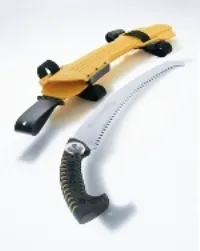
In particular, our selection of Japanese hand saws are perfect for cutting large and small limbs. The Silky Sugoi 360 Saw is one of our favorites. It offers an aggressive cross-cut tooth pattern (5.5 teeth per inch). The precision-ground, razor-sharp teeth with four cutting angles provide extremely fast, clean, and smooth cutting action. Features include a hard chrome-plated, taper-ground curved blade with a non-set tooth design and a starter knife at the tip of the blade. The curved blade provides greater cutting speed with less effort. The large and comfortable sure-grip handle gives strength and flexibility to the full length of the saw. It also comes with a scabbard that can be attached to a belt or leg, and (as with most of our Japanese hand saws) the blade is easily replaceable. Shop for more saws on our website or read more about Japanese hand saws on Shelter Blog.
What do you do if you have a lot of fallen trees on your property? The New York Times "Bucks" blog posted a helpful Q&A about the insurance implications of fallen trees.
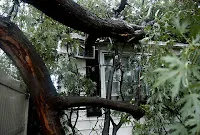
AP photo of fallen tree via NYTimes.comQ: Does insurance cover the cost of fallen tree removal, if it does not hit your home?
A. Generally, no. Homeowners insurance covers damage to insured structures, like your house or a detached garage. You’re also covered for resulting damage to any contents, and the cost of removing the tree if it falls on either structure. But, “If it just makes a mess in your backyard, it’s generally not covered,” says Jeanne Salvatore, a spokeswoman for the Institute.
That said, there are always exceptions — and some companies may cover removal of a fallen tree if it blocks, say, a driveway or ramp necessary for a handicapped person to access the property. The best way to find out is to call your agent, she says: “Don’t make an assumption that you’re not covered.”
Some of you may have a large tree or many fallen trees on your property, and a power tool is necessary to clear the area. Here are a few key chainsaw tips from Pat Hennin to ensure that your engine purrs smoothly every time you haul on that pull-cord.
- mix your fuel carefully
- clean that air filter
- try to find ethanol free fuel (good luck) this alcohol destroys the fuel pump and fuel valves
- always keep your gas tank full between uses otherwise water vapor will get in and clog the carburetor
- don't buy a green saw, because you'll never find it in the woods
- buy a chainsaw with a short bar—you're less likely to cut off your feet; an 18-inch blade will easily cut a 36-inch log.
- bring your saw sharpener into the woods with you; it is the most pleasant place to sharpen your saw
- don't forget to wear protective gear, especially eye and ear protection
Pat Hennin started using a chainsaw in earnest around 1960 when he worked as a lumberjack in Idaho. He had a plot with selected trees for felling in the Targhee National Forest and spent three solid months working those woods. If you have chainsaw questions, are looking for backwoods tools, or need a new chainsaw, call or visit Shelter, and we'll help you find find the right tool.