


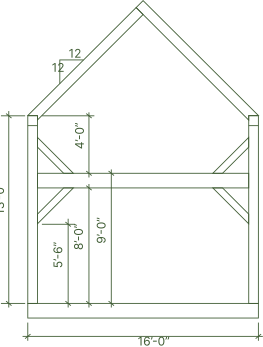
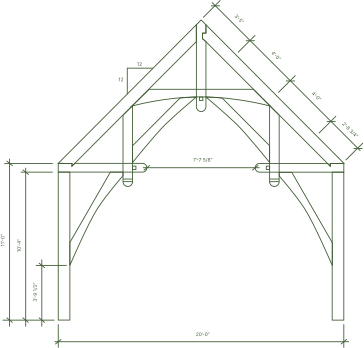

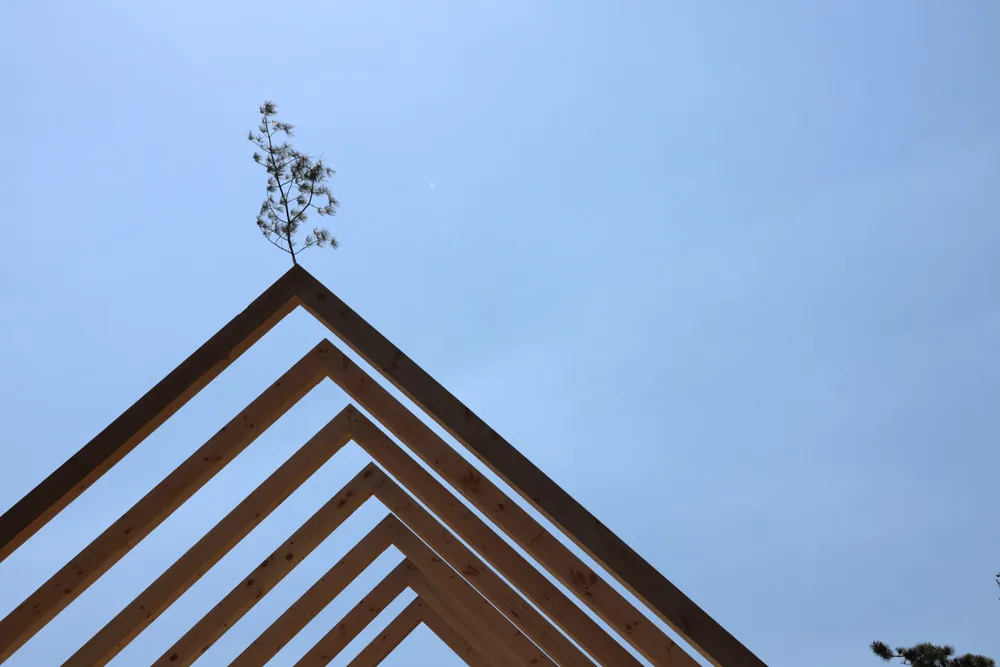
The construction industry accounts for roughly 40% of global carbon emissions. As builders and homeowners make the shift toward sustainability, the materials we choose have never been more important. While concrete and steel have dominated construction for decades, timber framing presents a compelling lower-carbon alternative that’s worth considering, especially if you spend time thinking about your carbon footprint.
The Carbon Cost of Traditional Building Materials
Concrete has become the default choice for many projects, but its environmental impact is massive. The cement industry is the most energy-intensive of all manufacturing industries, requiring limestone to be heated to 2,700 degrees Fahrenheit—a process that creates roughly 0.6 tonnes of CO2 for every tonne of cement produced.
It’s safe to say that that’s a lot of CO2, and steel presents similar challenges. The production of steel involves heating iron ore to 3,000 degrees Fahrenheit in blast furnaces, generating 1.8 tonnes of CO2 per tonne of steel. That’s the highest per-kilogram embodied carbon amongst major structural materials.
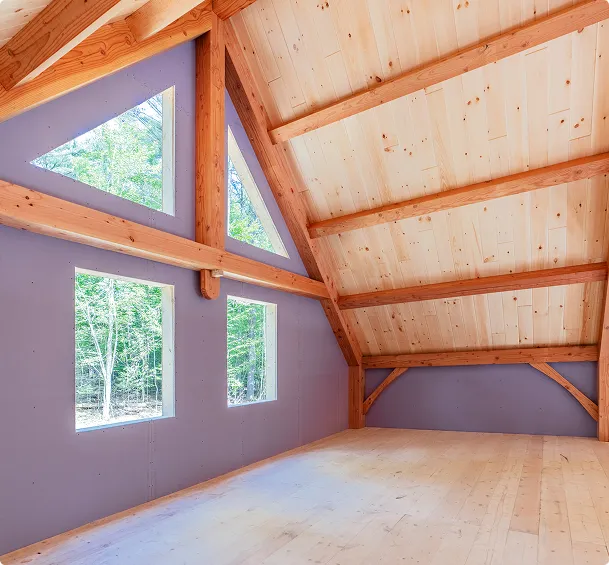
Timber Framing’s Carbon Advantage
Timber framing offers a fundamentally different approach. For every tonne of timber produced, only 0.017 tonnes of CO2 are generated. Not only that, but each tonne of timber stores approximately 1.8 tonnes of CO2 during its lifetime. That means that one ton of timber removes as much CO2 as one ton of steel produces.
The advantages translate into measurable results. A recent study of a mass timber university residence hall found that the timber structure achieved a 19% reduction in carbon emissions compared to a functionally equivalent steel structure. Studies consistently show that timber framing delivers a significantly lower carbon footprint while actively sequestering carbon.
Because mass timbers also weigh less than equivalently sized steel structures, they require smaller foundations and less concrete, further reducing emissions. Timber production is also sustainable in itself, with many harvesting and milling companies paying close attention to forestation, wildlife, and other sustainable practices.
Build a Sustainable Future with Shelter Institute
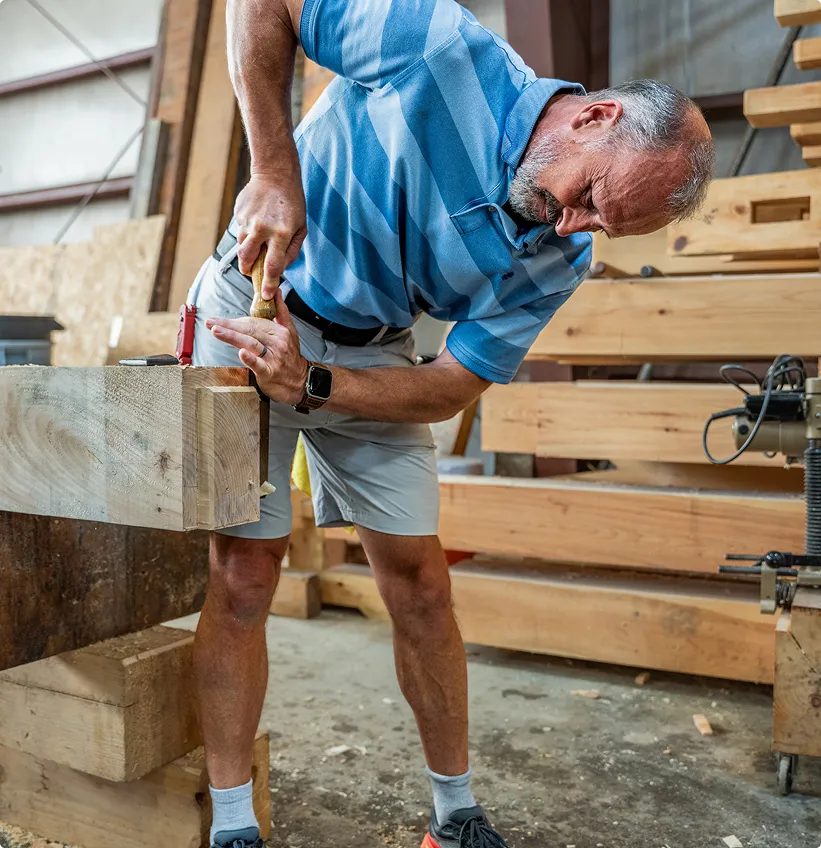
Sustainability isn’t just something we talk about; it’s important to us, and it factors into every decision we make. We source timbers from manufacturers that care, and we take the time to educate our audience on the major differences between building methods, alongside the huge advantages of choosing timber framing.
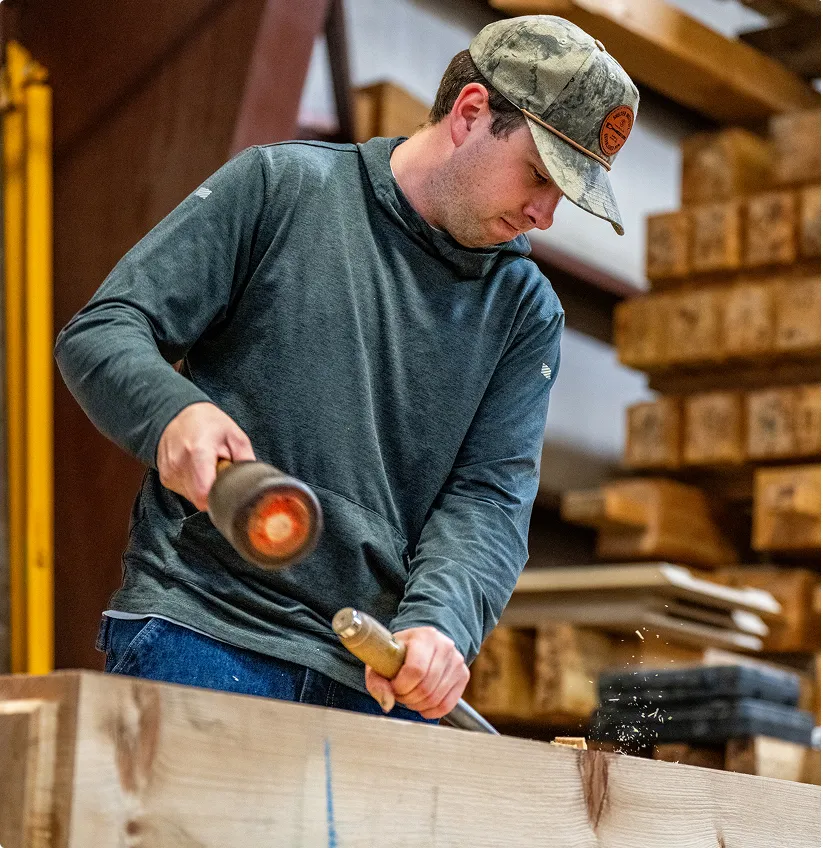
We’ve been teaching timber framing techniques since 1974, and we’ve witnessed firsthand how this centuries-old building method impacts the world around us in a positive way.
Whether you’re considering timber framing for your next project or simply want to learn more about eco-friendly building materials, we’re here to help. Explore our online and in-person classes, connect with our design build team, or visit our campus in Woolwich, Maine—let’s talk about how timber framing can bring your vision to life while treading lighter on the planet, too.

.webp)
.webp)