



Choosing the right wood for your timber framing project isn’t about finding some magical, perfect species. It’s about understanding what you need and what you can get.
How to Choose the Best Wood for Timber Framing
Before choosing a species, here's what to consider:
Availability
The best wood for your project is often the wood that grows in your region. Timber framing uses big, heavy pieces of wood, and shipping them long distances will only add unnecessarily to your overall cost. Here in Maine, we have eastern white pine and red oak. That's what typically makes the most sense for our projects. Look at what’s available locally first! You’ll save money while supporting local mills, too.
Sustainability
If you’re harvesting from your own land or working with a local sawyer, you’re already making a sustainable choice. If you’re buying from a larger supplier, look for FSC (Forest Stewardship Council) or SFI (Sustainable Forestry Initiative) certifications. These two groups help ensure forests are replanted and managed responsibly.
Cost
Some woods cost significantly more than others, so it’s important to keep your budget in mind when making the final decision. Hardwoods and specialty woods that need to be shipped long distances will eat up more of your budget, but softer woods like pine and hemlock are generally more affordable. It all depends on your aesthetic preferences and budget.. Remember, cheaper wood doesn’t mean a less attractive frame. We love a pine timber frame around these parts.
Strength
Different woods have different structural capacities. Some can span longer distances or carry heavier loads. This is where working with someone who really knows timber can pay off. You’ll need to ensure that the wood species you want to work with can handle the load of the project you’re imagining. Most common timber framing woods are plenty strong, however, for typical residential applications.
Workability
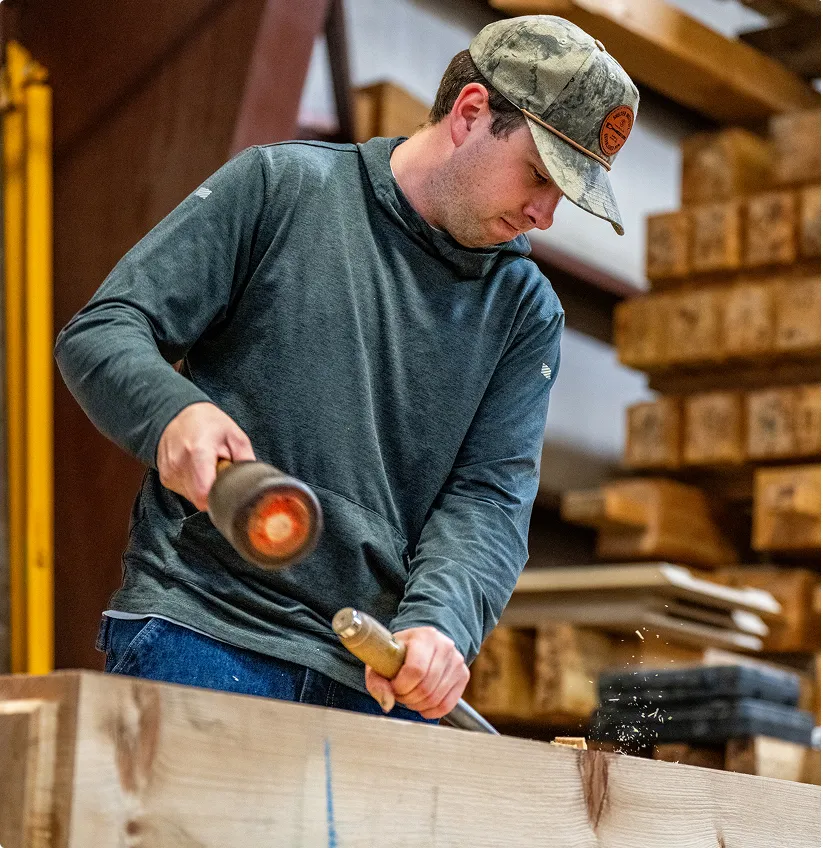
If you’re cutting joints by hand, workability matters. Softwoods are going to be easier to work with hand tools, making them ideal for beginners. Hardwoods like oak are tougher to work with and may be better suited to use with power tools, especially if this is your first time carving out a mortise. However, if you’re not building your timber frame yourself, this isn’t something you’ll have to worry about.
Different Species of Wood Used for Timber Framing
We work with a variety of wood species here in Maine, and over 50 years, we've gotten to know how each one performs. Here's a look at the woods you're most likely to encounter in timber framing.
Can You Use Green Wood for Timber Framing?
Yes! However, as green timbers dry, they can shrink. This is normal, and traditional timber frame joinery is designed to support this movement. Green wood is also easier to cut with hand tools and typically less expensive than dried lumber, so it’s a great option as long as you’re aware of its differences and how to accommodate them.
The Best Wood for Timber Framing? The Wood You Have Access To
The best wood for timber framing is the wood you can actually get. Timber frames from the 1800s are still standing all over this country, built from whatever wood was available locally. The joinery matters more than the species.
Choose wood that's available, affordable, and appropriate for your structural needs. Ready to learn timber framing? Check out our online courses or visit us in Woolwich. And if you're thinking about a custom timber frame, our design-build team can help you choose the right wood for your project.

.webp)
.webp)