



.webp)
There are a lot of different types of buildings out there. Stick builds. Timber frames. Log cabins. How are you supposed to keep them all straight? And which one offers the best value for your investment? Honestly, a lot of it comes down to personal preference—so we’re here to share everything about ours.
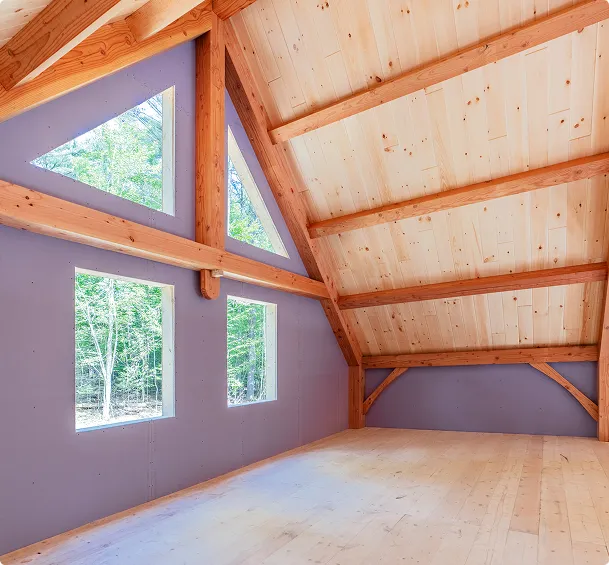
Timber framing is a style of building construction that uses heavy timbers to create a load-bearing structure, using wood-to-wood joinery instead of metal fasteners. Timber framing dates back thousands of years, and is often cited as one of the oldest building methods.
But what exactly is it, and what the heck is the difference between a mortise and tenon? Don’t worry. We’ve got answers to all your burning timber framing questions.
So… What is Timber Framing?
Now that you know the basics—that timber framing is a style of building construction created by connecting heavy timbers together with the use of joints—let’s get into the nitty-gritty. First and foremost, the most common joint used in timber framing is called a mortise and tenon. You’ll likely hear those two words thrown around a lot, but what do they mean?
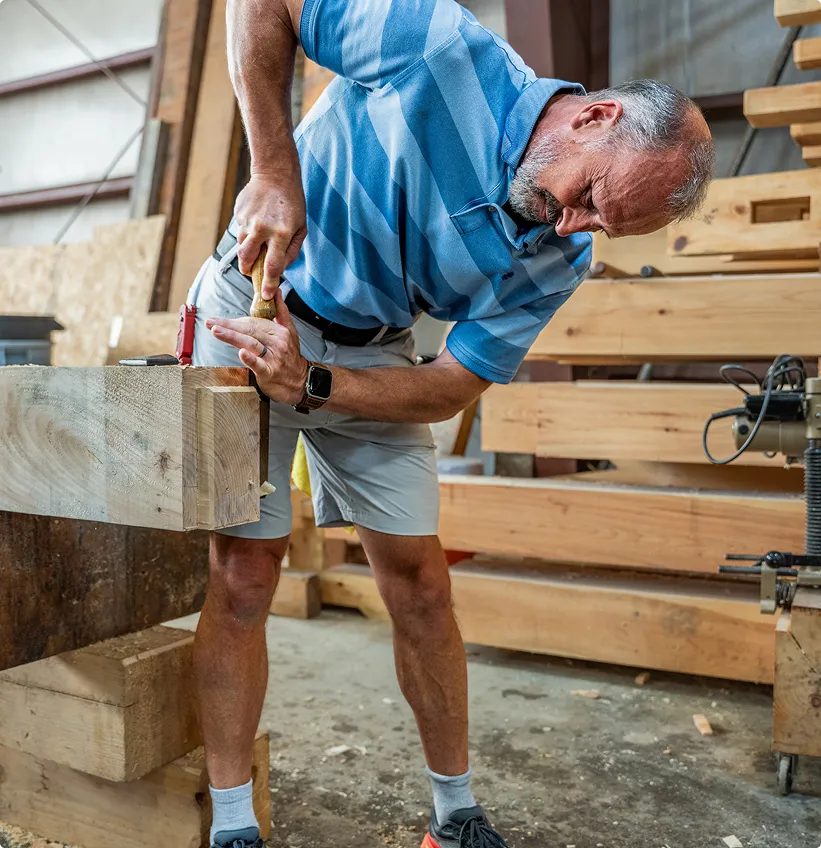
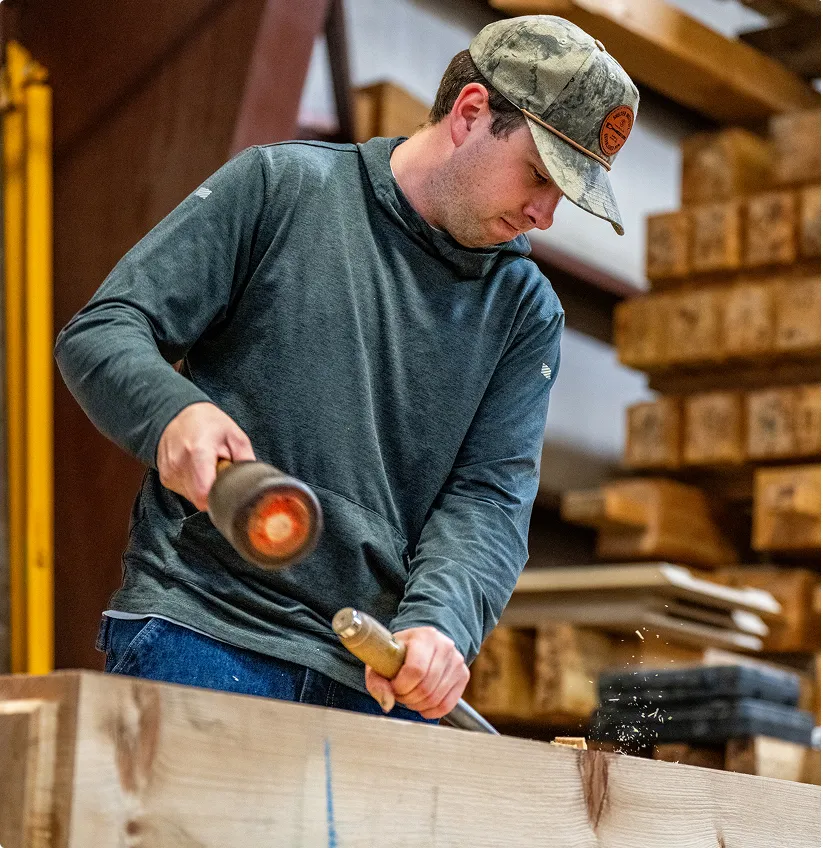
A mortise is a slot that’s cut into a piece of wood, rectangular or square in shape. A tenon is its counterpart. The same shape carved out of another piece of wood, made to slot right into the mortise and create a tight, lasting connection. Joints like these, and more complicated ones (which we’ll touch on later), are created by using hand tools like saws, chisels, and slicks, or power tools, like circular saws and chain mortisers.
We’ve had the hand tools vs. power tools debate a hundred times over, and there’s no single winner. However, we believe that nothing beats the feeling of carving out a joint with a perfectly sharp Japanese chisel.
So, those are the basics: heavy timbers carved and shaped to create snug joints that don’t require metal fasteners, all put together to form the skeleton of your home. The result is an incredibly durable structure that will stand the test of time and look absolutely beautiful doing it.
A Brief History of Timber Framing
From ancient temples in Japan to medieval cathedrals across Europe, timber frame structures have been standing strong for thousands of years. In fact, the Houruji Temple in Japan, built around 600 C.E., is still standing today.
In North America, timber framing was the primary construction method used by European settlers. In New England specifically, timber framing and the lumber industry were intrinsically tied together—more timber-framed homes meant more lumber to be milled. This building style continued into the early 1900s. However, when dimensional lumber and wire nails became more affordable and the demand for fast, inexpensive housing rose, stick-built constructions began to take over.
But that wasn’t the end of timber framing. In the 1970s, a small group of craftspeople and builders began rediscovering the beauty of old timber frame barns and homes. This sparked a revival of the craft, and in 1974, Shelter Institute was founded to help teach students how to build their own timber frame homes.
Timber Framing Terms You Should Know
Learning how to timber frame can feel like learning a new language. If you’re a seasoned builder, you’ll likely know the vernacular—but if you’re a complete and total beginner (first of all, welcome!), you might want to check out this mini-dictionary to get you started.
Timber: Large, heavy pieces of wood used for structural support. Typically 5x5 inches in size.
Post: A vertical timber that provides structural support.
Beam: A horizontal timber that spans between posts or other supports.
Joinery: The art and technique of connecting pieces of wood using carved joints rather than metal fasteners.
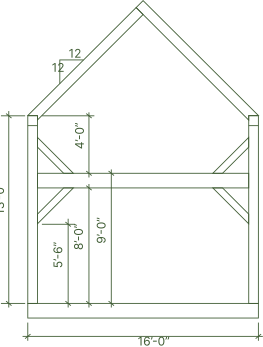
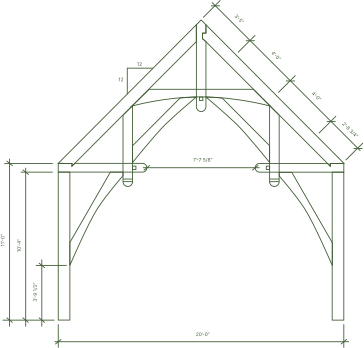
Bent: A cross-sectional frame unit that forms one section of the timber frame structure, assembled flat and then raised into position.
Raising: The process of assembling and lifting the timber frame sections into their final vertical position—a cause for celebration!
Mortise and Tenon: A straightforward joint type used in timber framing to connect two pieces of wood. The tenon tongue slots into the mortise hole and is secured in place with wooden pegs.
Check out our full glossary of timber framing terms
Is Timber Framing Right For You?
At Shelter Institute, we believe that timber framing is for everyone—whether you’re a seasoned builder or this is the first time you’ve heard the term “mortise.” Whether you’re looking for the right team to design and build your dream home or you’re looking for the tools to do it yourself, you’ve come to the right place.
If you value craftsmanship, durability, and the ability to create truly unique spaces that stand the test of time, timber framing might be exactly what you’re looking for.
Ready to dive deeper into timber framing? Explore our online and in-person timber framing courses or connect with our design build team to discuss bringing your vision to life.

.webp)