




Sometimes building a timber frame structure or learning how to master the perfect mortise and tenon joint isn’t enough—sometimes you need to know all the details about the legacy of the building method that originated thousands of years ago. Because timber framing isn’t just your run-of-the-mill building method, it’s a connection to ages of human craftsmanship. Nothing supports our belief that timber framing is the best option as much as timber-framed structures that have remained standing for millennia.
Ancient Origins to European Mastery
Did you know that the oldest timber-framed structure is from just under half a million years ago? That’s right. The Kalambo Falls site in Zambia is a wooden structure made from two large logs. It’s the oldest known evidence of a built wooden structure, made with structural wood and notched branches.
However, the origins of timber framing are highly debated. Mortise and tenon joints can be dated as far back as 7,000 years ago in Zhejiang, China. There’s also evidence of timber framing and wood joints across Egypt and other ancient civilizations. In ancient shipbuilding, particularly among the Phoenicians around the Mediterranean, locked mortise and tenon joints were extensively used to craft ship hulls—a technique that became known as Phoenician Joints. Timber framing was also used to craft furniture, especially in Asian civilizations. All that to say, the origins are widespread, and it’s unclear where exactly they began.
However, following the long and incredibly interesting history of ancient civilizations across the eastern hemisphere, timber framing became more widespread across Europe in the 16th and 17th centuries, though it was limited by the availability of wood.
Timber Framing Comes to America
When English settlers arrived in Jamestown in 1607, they found something that would shape American building for the next 250 years: vast forests full of timber. Unlike timber-scarce Europe, America’s resources allowed colonists to build larger homes and experiment with new designs. With the available timber, they created Cape Cods and two-story dwellings that still dot the New England landscape.
The Fairbanks House in Dedham, Massachusetts, for example, was built in 1637 and is still standing. It’s the oldest known timber frame structure in North America. However, many timber-framed homes in North America are hard to identify because new owners have covered them with clapboard or brick. If you look in the attic of any old New England home, you just might find hand-hewn beams joined with wooden pegs.
The Impact of the Industrial Revolution
By the mid-1800s, however, timber resources were dwindling just as the industrial revolution introduced the ability to mass-produce dimensional lumber and machine-made nails. During this period, time was precious, and spending weeks hand-crafting mortise and tenon joints was no longer a possibility. Instead, people turned to stick-builts.
“Balloon construction” using lighter lumber became the norm in the late 19th century, followed by “platform construction” in the 1930s—the method most American homes still use to this day. The craft of timber framing, which required years of apprenticeship to master, nearly disappeared. Traditional joinery skills faded as fewer carpenters came to rely on them.
The Modern Revival
In the 1970s, environmental awareness grew, and people began to reassess their relationship with nature. As a result, interest in traditional building methods returned. Suddenly, timber framing looked attractive again—not despite its ancient origins, but because of them.
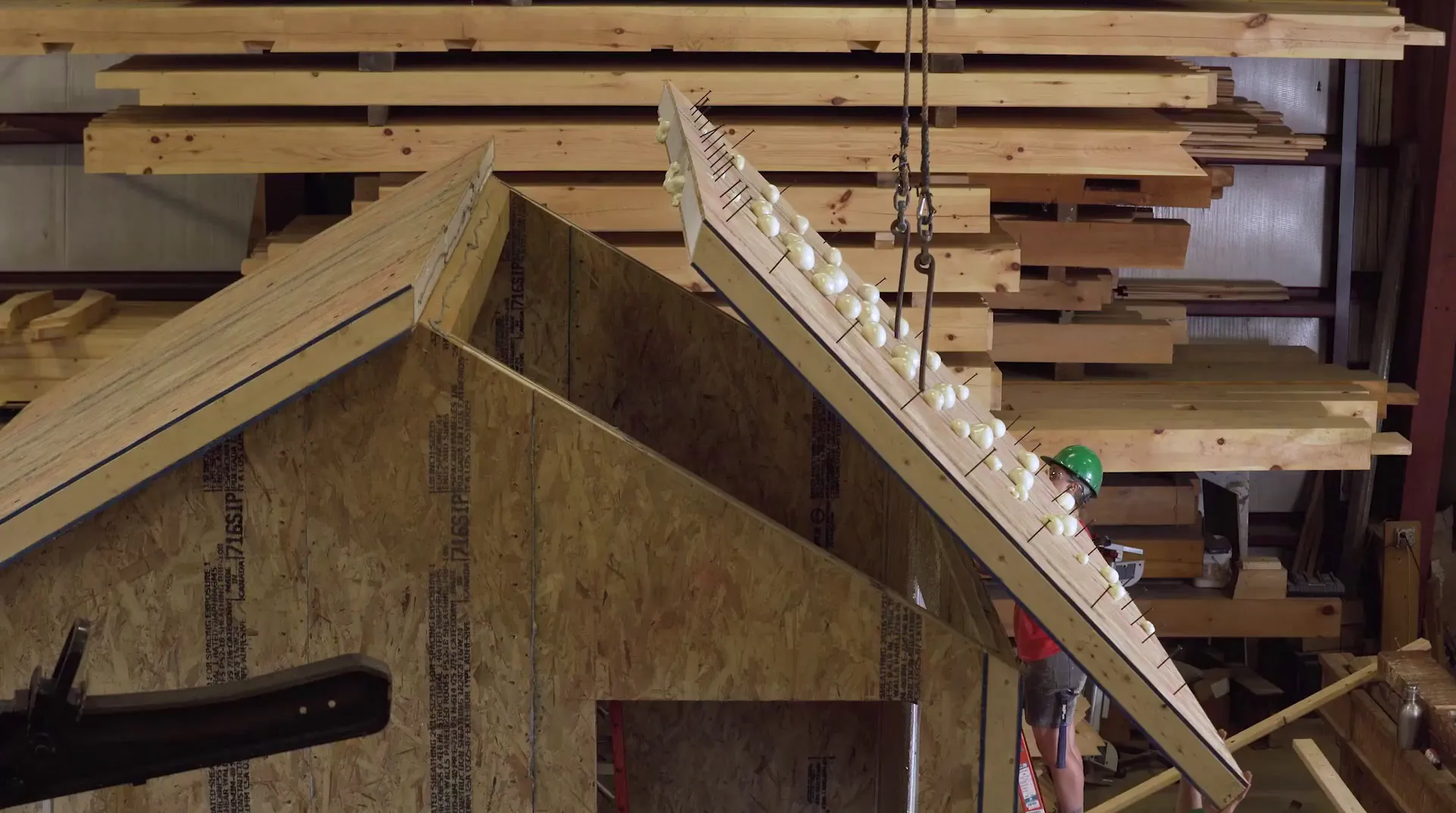
Modern advances made this revival possible. Structurally insulated panels (SIPs) solved the insulation challenges that plagued older timber frames, offering superior R-values and energy efficiency. New adhesives and CAD design capabilities allowed timber frames to combine old-world craftsmanship with modern performance.
Shelter Institute: Carrying the Tradition Forward Since 1974
Right in the middle of timber framing’s modern revival, Pat and Patsy Hennin started Shelter Institute in Bath, Maine. They offered their first timber framing classes in the second-floor space, paying only $50 for rent per month. Their mission was simple: teach people how to build their own timber frame homes.
The timing happened to be perfect. A 1975 New York Times feature story brought students from around the world, and in 1979, Time Magazine wrote about Shelter Institute, saying that graduates “leave knowing how to do something that most Americans only dream about doing: build a house.” The momentum continued to build. By 1995, Hennin Post and Beam—the first iteration of Shelter Design Build—had produced its 100th timber frame and showed no signs of stopping.
Today, Shelter Institute stands as proof that traditional craftsmanship has a place in the modern world. For 50 years, we’ve taught thousands of students the same mortise and tenon techniques that builders used centuries ago. Plus, we’ve expanded from that $50/month rental space to a beautiful Woolwich campus, created a full catalogue of in-person and online timber framing courses, and stocked a store with all the timber framing tools we use and love.
A Craft that Endures
From ancient temples to contemporary homes, timber framing connects us to a heritage of craftsmanship that refuses to fade. For 50 years, we’ve had the privilege of teaching thousands of students these time-honored techniques, watching them build not just structures, but confidence, competence, and connection to a craft that spans centuries. That’s the real beauty of timber framing. It’s not just about building homes that last (though that is important, too), we’re keeping a living tradition alive, one mortise and tenon joint at a time.

.webp)
.webp)