


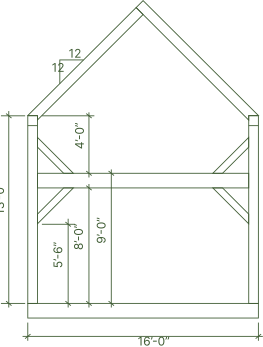
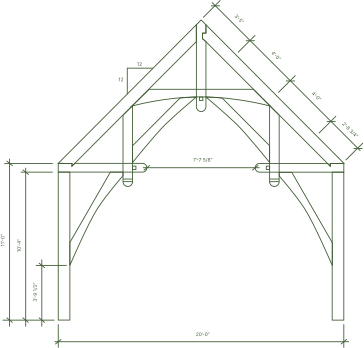

Whether you're dreaming of building your own timber frame home, enrolled in one of our courses, or simply curious about this ancient craft, understanding the language of timber framing is your first step. For over 50 years, we've been teaching students the art and science of timber framing, and we understand the necessity of a good dictionary.
This glossary covers the essential terms you'll encounter in timber framing—from the components that make up the frame itself to the traditional joints that hold it together, the tools that shape it, and the methods that bring it all to life.
Think of this as your reference guide, whether you're standing in our shop in Woolwich, watching our YouTube videos, or working through an online course. Let's demystify the terminology so you can focus on what matters: building something that lasts.
Components
Post: A vertical timber that carries loads from above down to the foundation. Posts form the primary vertical framework and typically run from sill to plate.
Beam: A horizontal timber that spans between posts and carries loads from above, such as floor joists or roof rafters. Beams transfer weight to the vertical posts.
Brace: A diagonal timber installed between posts and beams to resist lateral forces and prevent the frame from racking. Braces are essential for stability in timber frame construction.
Plate: The top horizontal timber that connects and caps the posts at the top of a wall. Plates serve as the foundation for roof framing and help tie the structure together.
Sill: The bottom horizontal timber of a timber frame that sits on the foundation and supports the vertical posts. Sills must be properly treated or naturally rot-resistant since they're closest to moisture.
Girt: A horizontal timber that connects posts at mid-height, typically at floor level in multi-story structures. Girts provide lateral support and serve as attachment points for floor joists.
Rafter: A sloped structural timber that extends from the plate to the ridge beam, forming the skeleton of the roof. Rafters carry the roof load and establish the roof pitch.
Joist: A horizontal structural member that spans between beams or girts to support floor or ceiling loads. Joists are typically smaller than beams and spaced at regular intervals.
Joinery
Mortise and Tenon: The fundamental joint in timber framing where a projecting tenon fits snugly into a corresponding mortise. This joint has been used for thousands of years and forms the backbone of traditional timber frame construction.
Dovetail Joint: A strong interlocking joint where one timber features wedge-shaped "tails" that fit into corresponding "pins" cut into another timber, creating a mechanical lock that resists pulling apart.
Scarf Joint: A method of joining two timbers end-to-end to create a longer beam by cutting complementary angles or steps in each piece. When properly executed, a scarf joint can be as strong as a single continuous timber.
Pegged Half-Lap: A joint where two timbers cross and each is notched to half its depth so they fit together flush, then secured with wooden pegs. This joint is commonly used where braces meet posts or beams.
Tools & Techniques
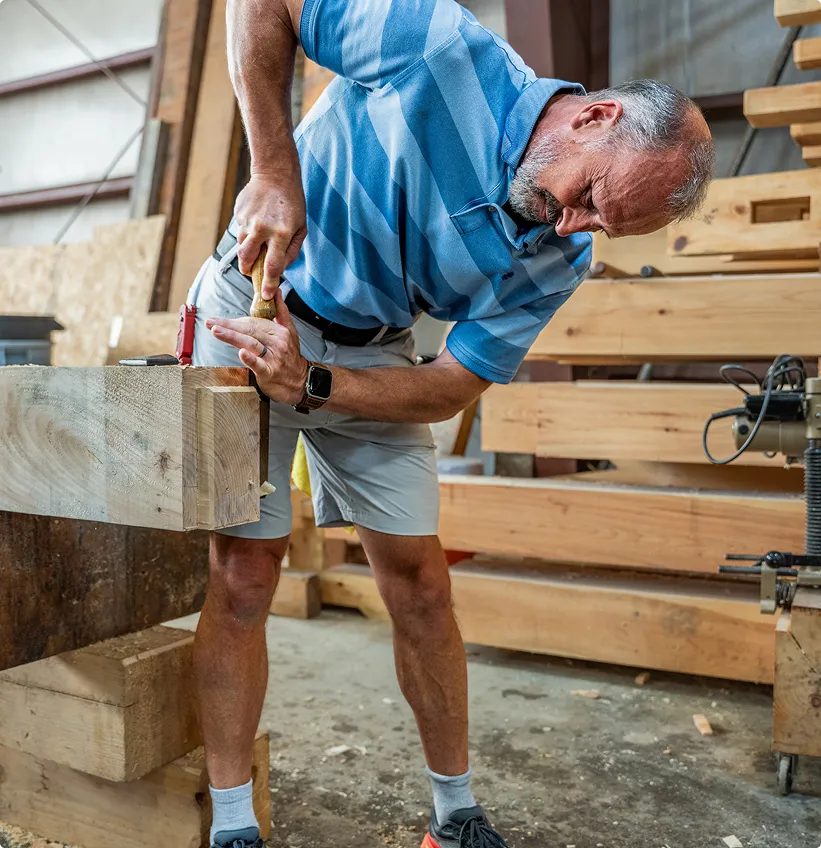
Slick: A large, heavy chisel with a wide blade used specifically in timber framing to pare and clean up joints. Unlike regular chisels, slicks are pushed by hand rather than struck with a mallet.
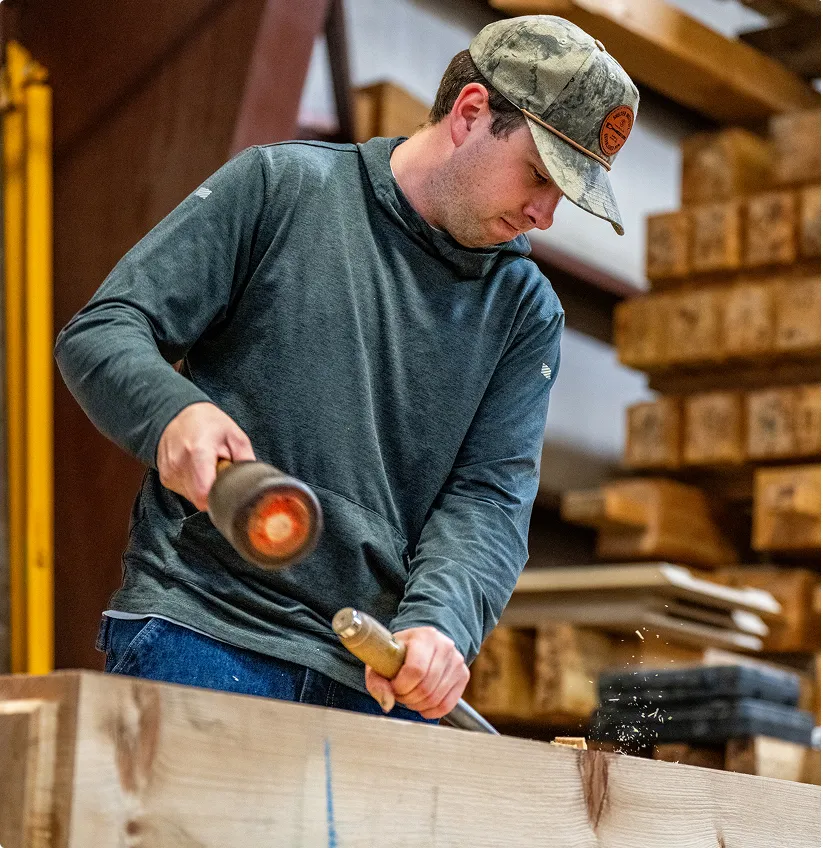
Chisel: A cutting tool with a beveled edge used to remove material and refine joints in timber framing. Chisels come in various widths and are struck with a mallet to make controlled cuts.
Auger Bit: A drill bit designed specifically for boring clean, precise holes in timber for pegs and bolts. Auger bits have a spiral shape that pulls itself through the wood and efficiently removes chips.
Framing Square: An L-shaped metal measuring tool essential for laying out joints, checking right angles, and marking cut lines on timbers. This tool has been a timber framer's companion for centuries.
Building Methods
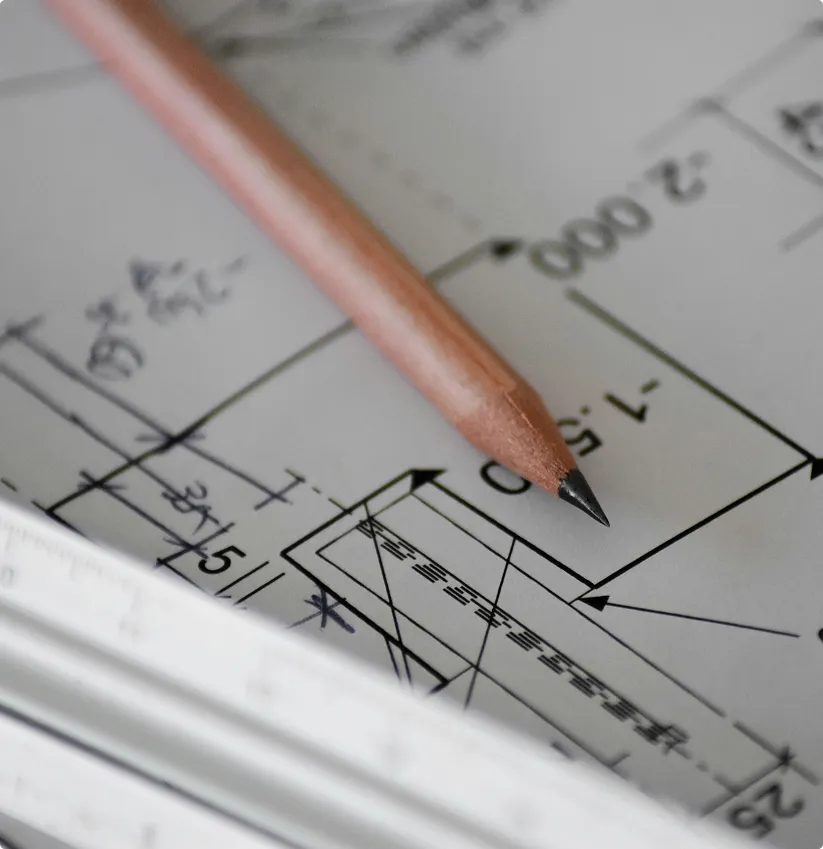
Layout: The process of measuring and marking timbers with the locations of joints, cuts, and reference points before any cutting begins. Precise layout is critical—measure twice, cut once.
Raising: The process of assembling and erecting a timber frame, traditionally done by a community working together to lift the heavy frame sections into place. Modern raisings may use cranes but still require careful coordination.
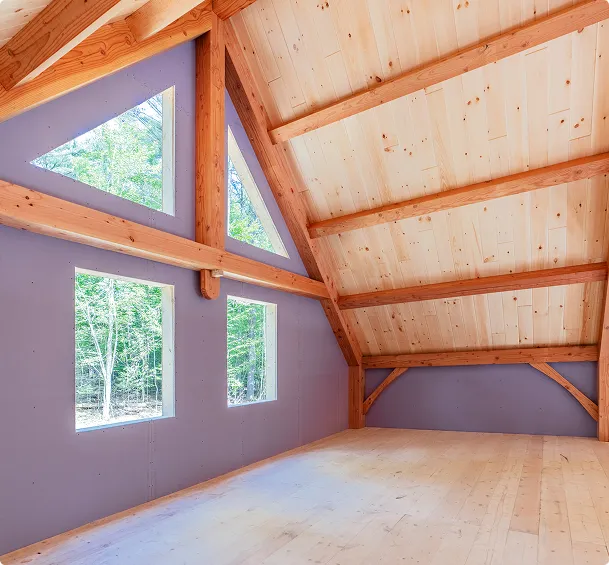
Post and Beam: A construction method using large timbers arranged in a grid pattern where vertical posts support horizontal beams. This system creates an open interior free of load-bearing walls.
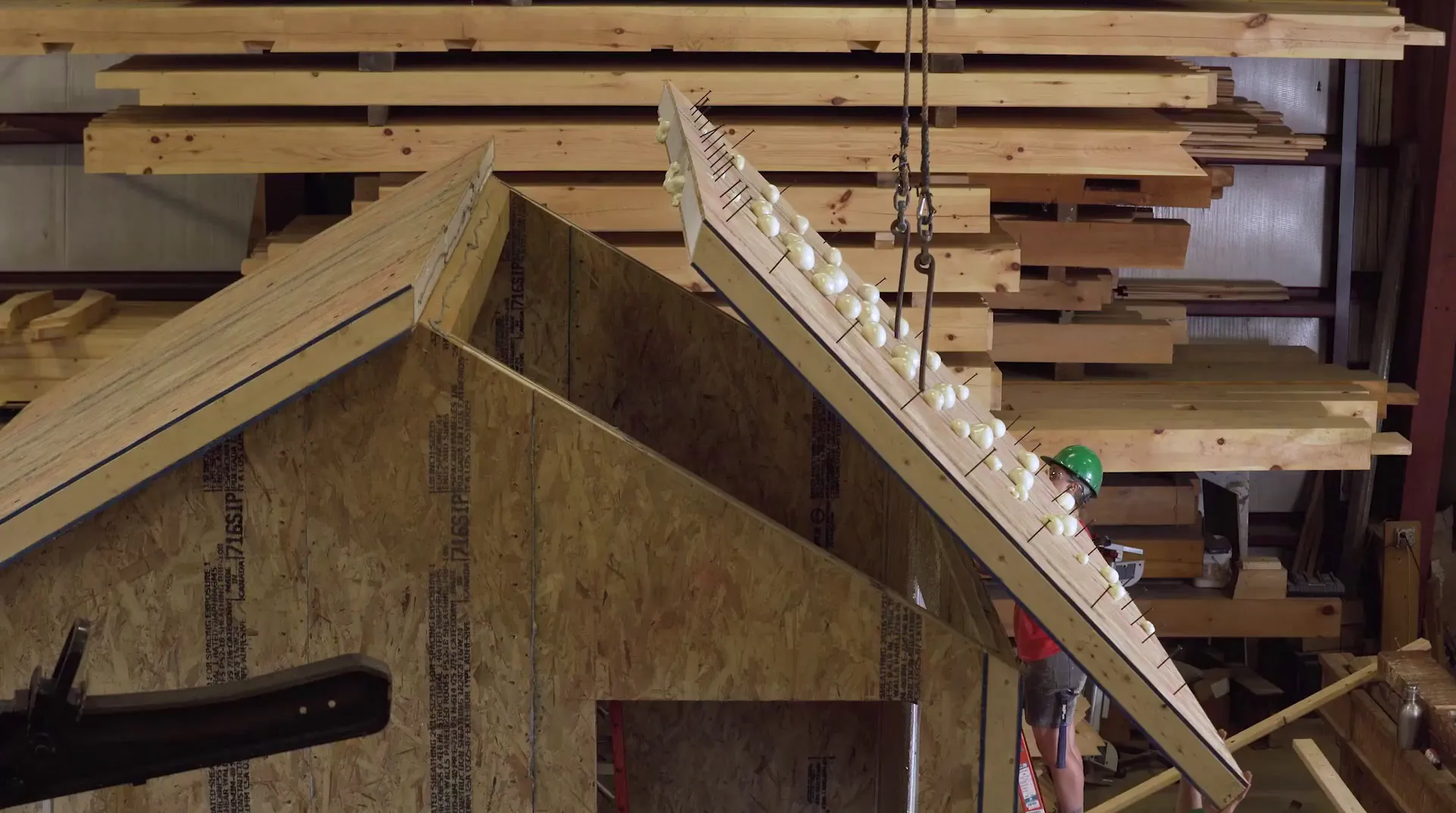
SIP (Structural Insulated Panels): Factory-manufactured panels consisting of rigid foam insulation sandwiched between two structural faces, commonly used to enclose timber frames. SIPs provide excellent insulation and go up quickly.
Timber Frame Kit: A pre-designed and pre-cut timber frame package that arrives ready for assembly on site. Kits offer a more affordable and accessible entry point into timber frame construction.
Custom Designed Build: A fully customized timber frame project where every aspect is designed specifically for the client's needs, site, and vision. This approach offers complete creative freedom but requires more time and investment.
Wood & Materials
Green Timber: Freshly cut wood that still contains its natural moisture content, making it heavier and easier to work with hand tools. Green timber will shrink and season over time after the frame is raised.
Seasoned Timber: Wood that has been dried to reduce its moisture content, either through air drying or kiln drying. Seasoned timber is lighter, more stable, and less likely to shrink or warp significantly.
Grain: The direction and pattern of wood fibers running through a timber, which affects strength, workability, and appearance. Working with the grain rather than against it produces cleaner cuts.
Now That You’re Speaking Our Language…
Ready to move beyond the glossary? Explore our online courses, plan a visit to our campus in Woolwich, or check out the tools we use every day at Shelter Tools. We've been teaching this craft since 1974, and we'd love to help you build what you've been dreaming about.

.webp)
.webp)