



.webp)
If you’re in the process of building or buying a new home, you’ve probably heard the term “stick-built” thrown around. But what exactly is a stick-built home? Well, they’re the norm these days. If you’re walking around a neighborhood, there’s a good chance that at least 90% of the homes are stick-built construction. They’re the default, built with smaller dimensional lumber like 2x4s and 2x6s.
Timber frames, however, stand apart (in our opinion). They’re made with heavy timbers and wood joinery to create a beautiful and durable home that can last lifetimes. They’re unique, charming, and feature a wealth of benefits that likely have drawn you in their direction. But which one is right for you?
These two types of homes have a variety of differences, and choosing which one is right for you can be difficult. Here are the key differences between timber frame and stick-built homes.
How They’re Built
The biggest difference between timber frames and stick-built homes is how they’re constructed—and those differences are pointed out right there in the name.
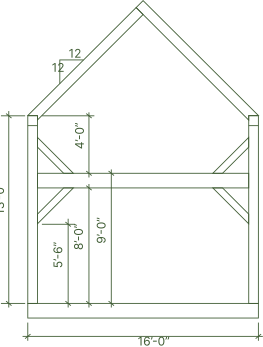
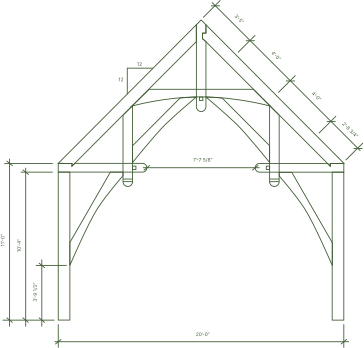
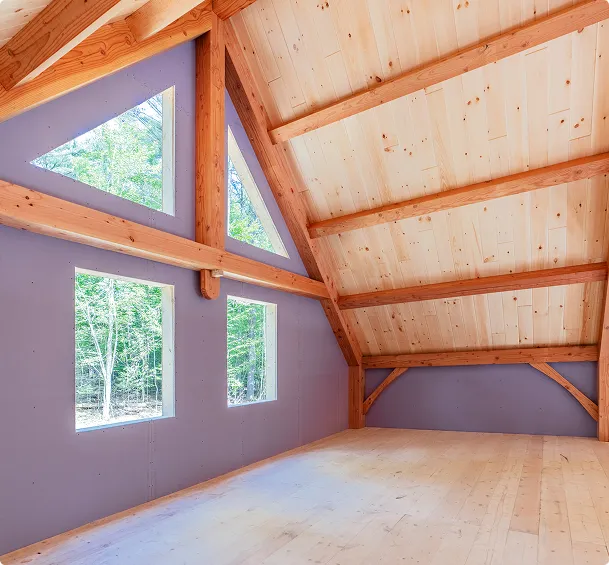
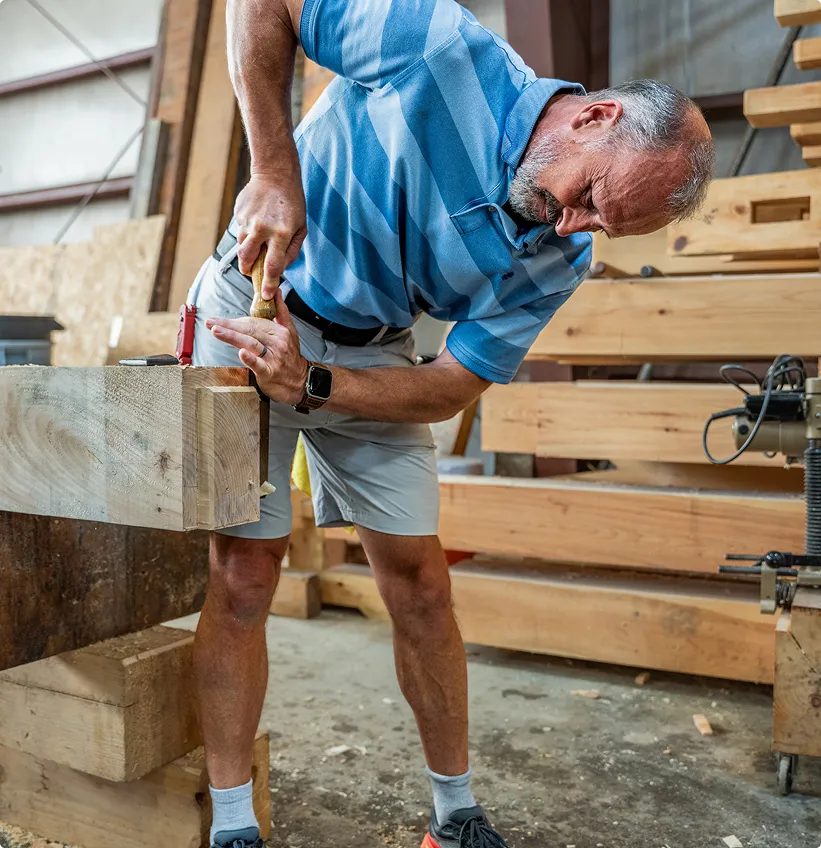
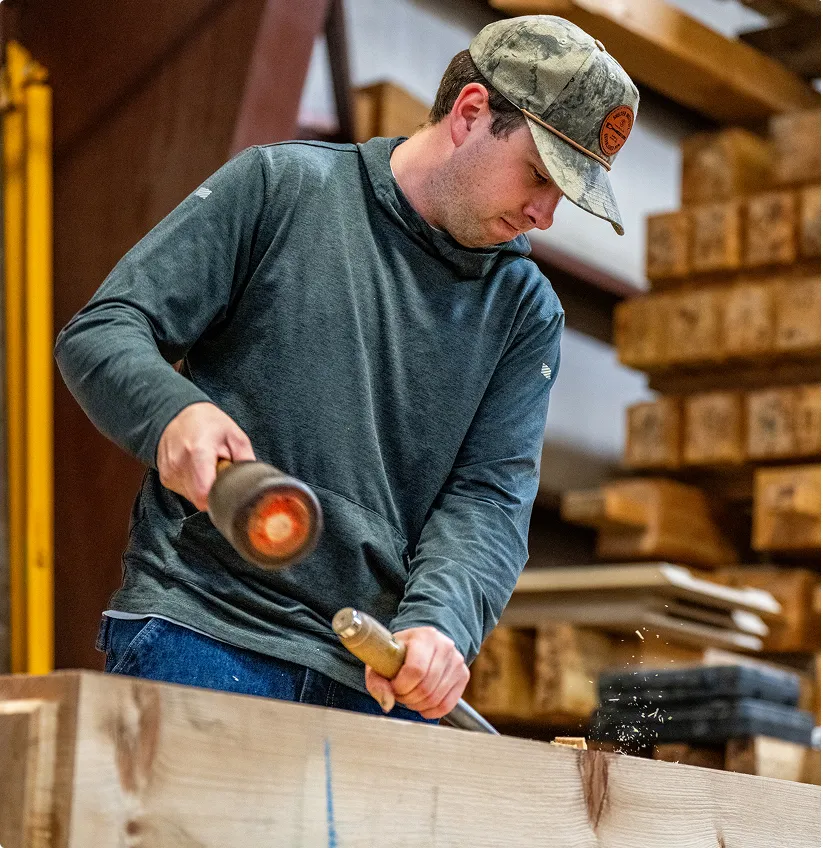
Timber frame homes are constructed with large, solid wood beams connected with traditional joinery techniques and secured with wooden pegs. The entire frame is fabricated off-site in a workshop before it's transported to the building site and assembled or raised. The posts and beams carry the structural load, allowing for a dynamic, open interior.
Stick-built homes rely on load-bearing walls placed in specific locations to support the structure. While there are, obviously, plenty of design options, you’ll need to work within certain engineering requirements and constraints.
Design Flexibility
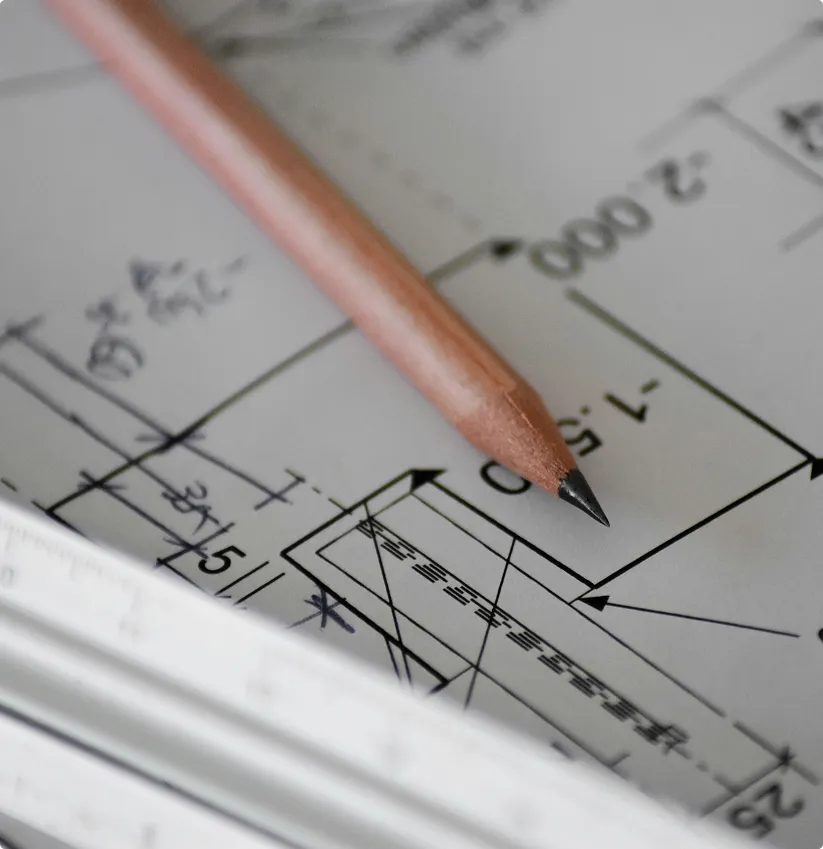
With timber frame homes, the posts and beams do all the structural work, removing the need for interior load-bearing walls. This gives you the flexibility to design your interior however you’d like—wide open spaces, sweeping lofts, walls wherever you want them (or not at all). The trade-off? Your design will need to be finalized before construction begins.
Stick-built homes allow for plenty of design options and flexibility. However, because load-bearing walls are necessary to support the structure, you may not be able to achieve that same wide-open feel as you would with a timber frame design.
Insulation & Envelope
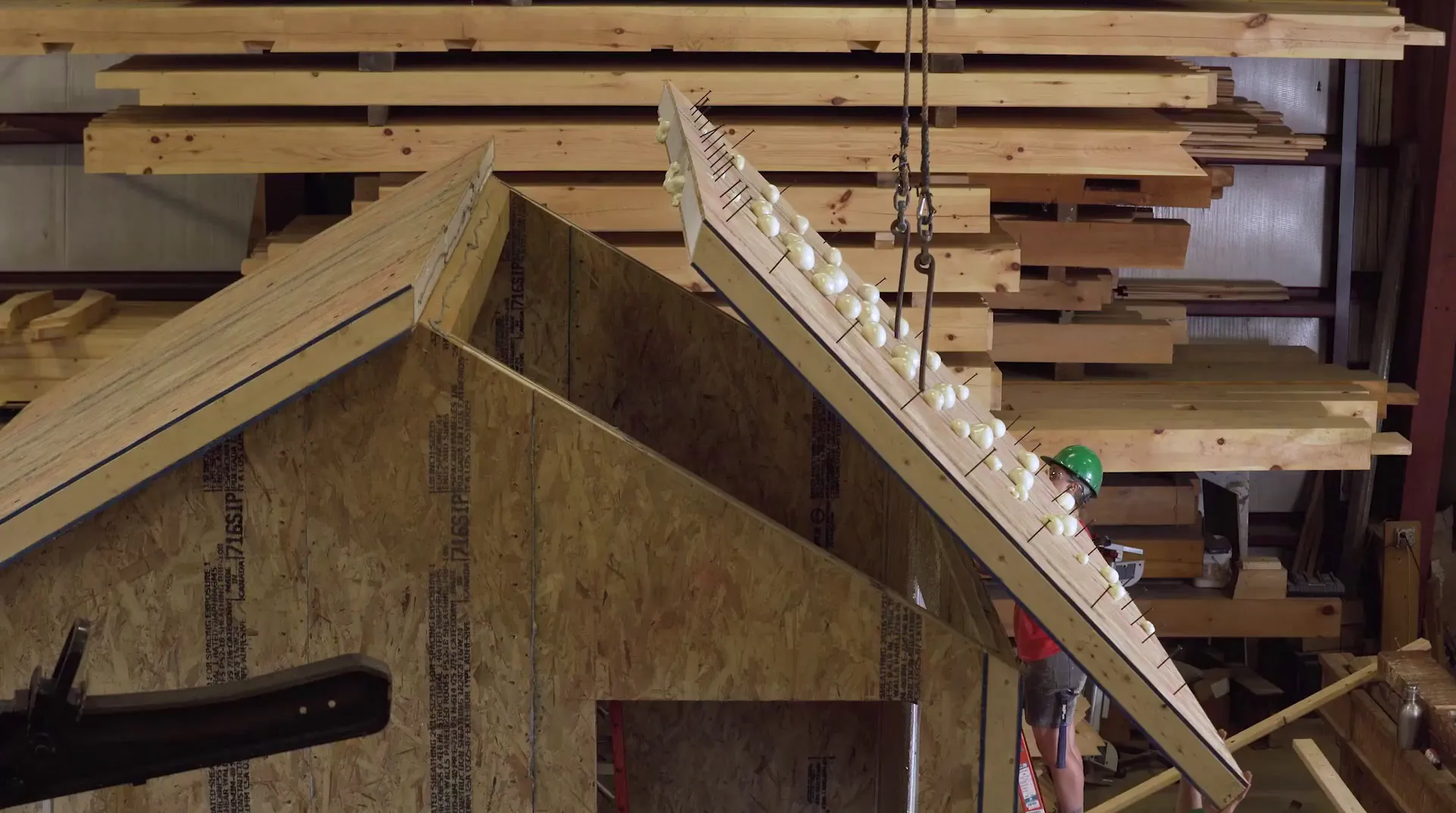
Timber frames typically use Structurally Insulated Panels, or SIPs. These panels act as both insulation and the building envelope, creating an incredibly energy-efficient shell. SIPs are custom-designed and pre-cut. They go up fast, typically within a few days. While they often cost more upfront than typical insulation, the energy savings and fast installation balance out the price.
Stick-built homes offer more insulation options, spray foam, fiberglass batts, cellulose, or rock wool. You have the flexibility in choosing what works best for your budget. However, installation can be complicated, and it requires multiple layers to create the building envelope. There’s no option as easy and straightforward as SIPs.
Aesthetics
We’re a timber framing company, so we admit we're naturally biased toward timber frames here. We love their stunning visual impact; the exposed posts, beams, and joinery become the focal point of your interior and create a warm, organic aesthetic. Every mortise and tenon joint, every wooden peg—each tells a story of craftsmanship and tradition—whether you built it yourself or not. If you love the look of natural wood and want your structure’s bones to be a part of the design, timber frames deliver on all fronts.
Of course, there are plenty of aesthetic options when it comes to stick-built homes. However, you’ll miss out on that natural wood, structural look that timber frames have to offer.
Cost & Timeline
Ten years ago, we might have argued that timber frames were much more expensive than standard stick-built homes, but at this point, the cost difference between the two has narrowed considerably. If you’re looking to build your own home, a timber frame might be the way to go. Timber framing materials tend to cost more, but because the homes go up so quickly, there’s potential for labor costs to be lower. Besides, if you choose to build your own, you can realize significant savings.
Stick-built construction has lower upfront material costs as it uses more readily available lumber. However, on-site construction takes longer, and weather can often slow progress even further.
Don’t forget, while timber framing might cost more, you’re investing in a structure that isn’t going anywhere. Timber frame barns from the 1800s are still standing, so your new timber frame certainly won’t be going anywhere anytime soon.
Which Method is Right for You?
There isn’t a one-size-fits-all answer. The right choice depends on your priorities, budget, and vision. If you're interested in timber framing or want to learn more, we encourage you to explore our sites and reach out if you have any questions or want to talk about a new project.

.webp)