



We get asked this question a lot: Is timber framing sustainable? The short answer is yes. The long answer? It’s one of the most sustainable building methods out there—and that isn’t just marketing speak. We’ve been teaching timber framing and building timber frames for 50 years. We’ve seen firsthand what holds up, what doesn’t, and what actually makes a difference when it comes to sustainability.
Timber framing is one of the oldest construction methods still in use today. Yet, it’s also one of the greenest. Maybe that’s because it was created before big factories were. It’s a great example of “newer isn’t always better,” especially when newer means materials that require more energy to produce and a structure that won’t last as long.
We see the benefits of a stick-built frame, don’t get us wrong. But when it comes to sustainability, timber framing is the clear winner.
Wood as a Renewable Resource
Wood is renewable. It’s one of the only major building materials that grows back. Trees absorb carbon while they’re growing, acting as natural carbon sinks. When you harvest a tree at the end of its life and turn it into a timber frame, that carbon stays locked in the wood for as long as the structure stands, and for timber frames, that’s a long time.
For example, the structures from the 1800s that are still standing strong today are still storing the carbon those trees absorbed 200 years ago.
While dimensional wood does keep its carbon as well, these structures don’t tend to stay standing as long, and when that wood ends up in a landfill, it will rot and release that carbon. On top of that, dimensional wood often comes from younger trees—requiring more diesel to plant and maintain than the harvest of mature trees for timber framing.
Responsible forestry is also important in both practices. Wood being renewable doesn’t actually matter if we’re not putting the effort into ensuring it grows back. There are two certifications that we look at and recommend that those looking for their own lumber look for as well: FSC Certified and SFI Certified. The FSC (Forest Stewardship Council) and the SFI (Sustainable Forestry Initiative) certify those involved in the process of milling wood. They give their seal of approval, stating that these companies are doing their part when it comes to sustainability, forestry restoration, and maintenance.
Less Waste, More Precision
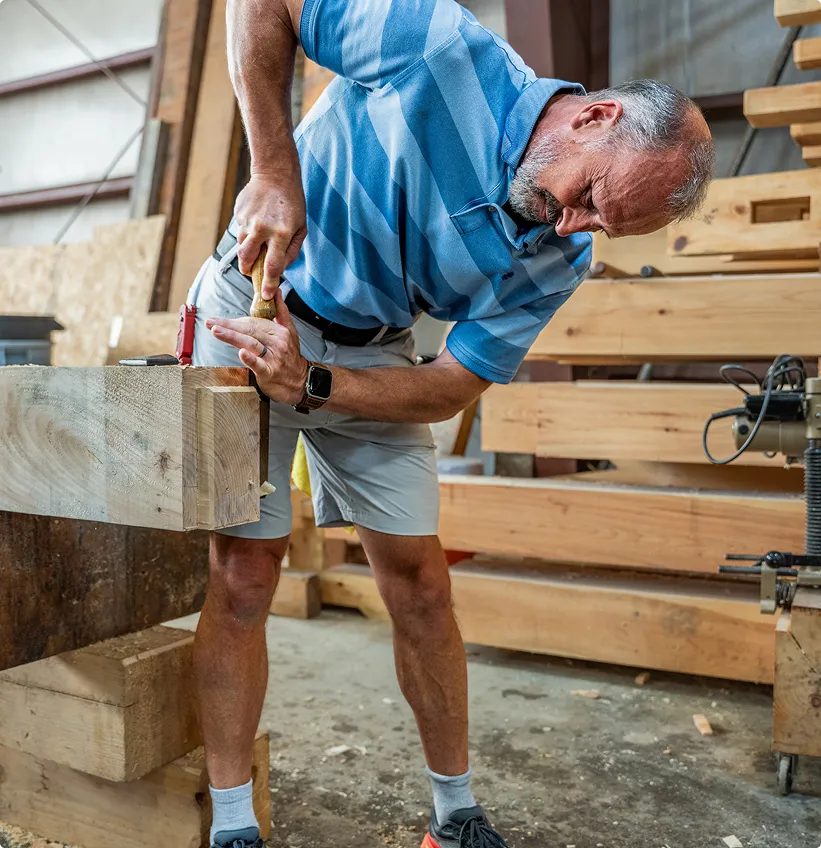
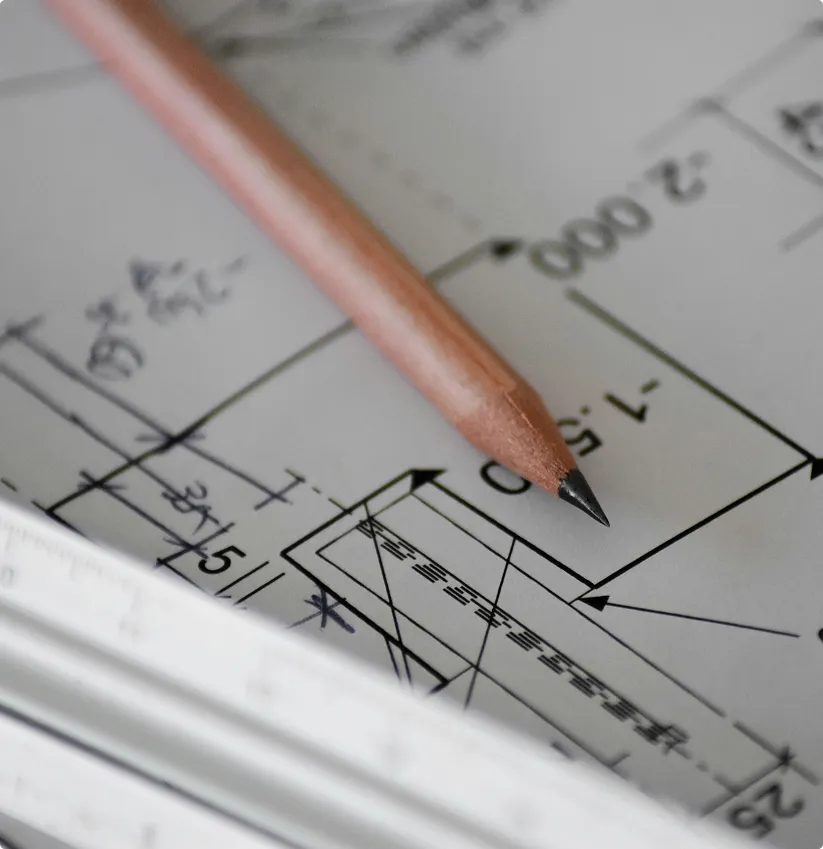
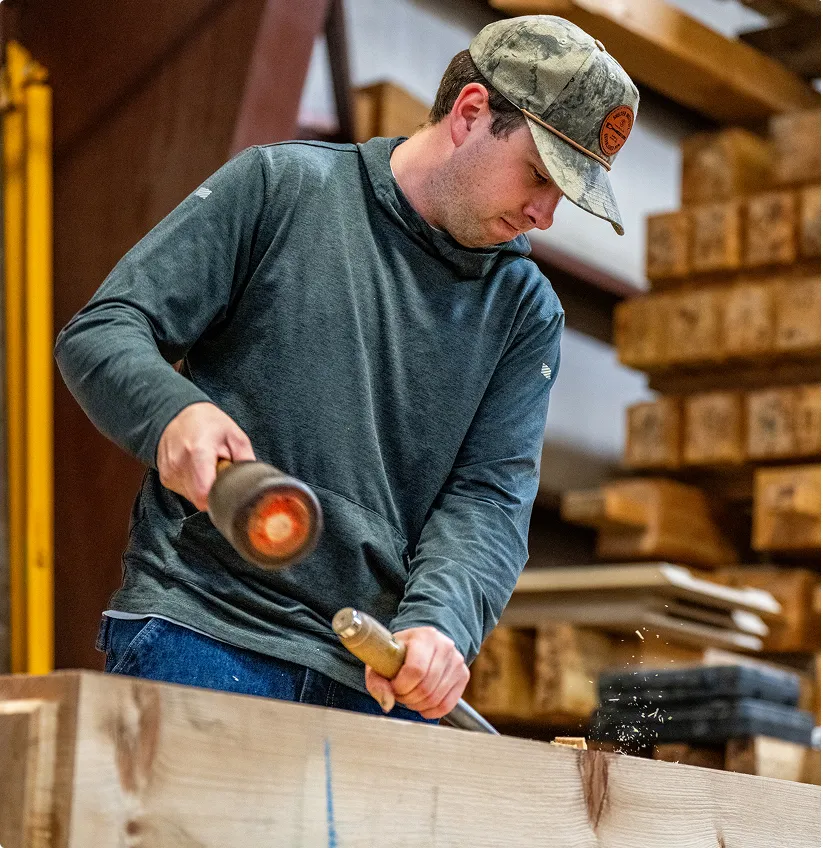
Timber frames also produce much less construction waste than conventional building methods. Timber frames are fabricated off-site in a controlled workshop environment where the frame is measured, marked, and cut before it ever reaches the building site. The design is finalized, and the raising process is straightforward. This precision means minimal waste. Each cut is intentional, and every piece has a purpose.
With stick-built homes, material waste is part of the process. Scraps, off-cuts, damaged materials—it all adds up, and most of it ends up in a dumpster.
What little waste we do produce in timber framing often gets repurposed. Sawdust can be used for mulch or animal bedding. Smaller pieces might become kindling or be used in other projects. We aren’t throwing away truckloads of construction debris.
Plus, because on-site assembly is quick, that means less site disturbance, less noise pollution, and less energy used by construction equipment.
The Most Sustainable Building is the One That Lasts
It seems obvious, but the most sustainable building is the one that doesn’t need to be replaced. A stick-built home can last anywhere from 70 to 120 years, but there are timber frames that are still standing after hundreds of years, like this one from 1287.
Timber frames last a long time because of the construction method used. Those mortise and tenon joints are incredibly strong and durable. With good maintenance, your timber frame home will be a piece of your heritage, a place that can be passed down for generations. You can’t do that with a stick-built, not without burdening later generations with expensive maintenance.
If and when a timber frame comes to the end of its lifecycle, it can be taken apart, and that wood can (and often is) used for other projects and purposes! The dimensional labor in your typical stick-built home is just going to end up in a landfill.
Energy Efficiency & The Building Envelope
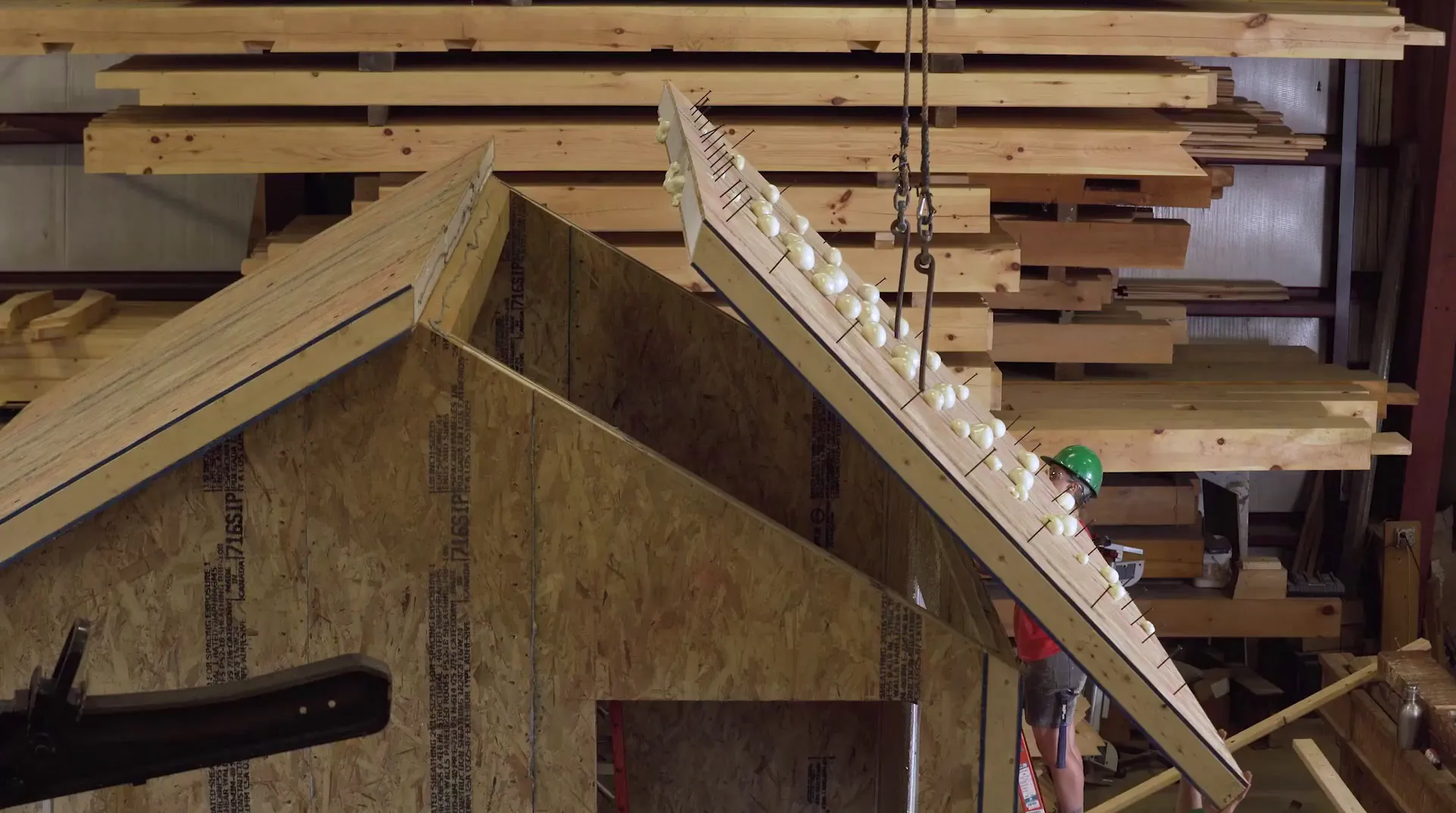
Sustainability in timber framing doesn’t stop at the timbers themselves. Other materials, like SIPs (structurally insulated panels), also contribute to their efficiency. SIPs create a superior thermal envelope—basically a tight, well-insulated shell that keeps in heat during the winter and out during the summer. This means you’re relying less on mechanical heating and cooling systems, which translates to lower energy use for the life of the building.
Timber frames are also known for their beautiful, open floor plans. Because the posts and beams carry the structural load, there’s no need for internal load-bearing walls, making the structure easier to heat and cool, too.
Built to Last, Built to Matter
When you build something that lasts centuries, uses renewable materials, stores carbon, and can be passed down for generations, you’re making a genuinely sustainable choice. After 50 years of teaching and building timber frames, we’ve seen what works. We’ve seen our frames age beautifully, old barns get carefully dismantled and given new life, and the next generation fall in love with the craft we cherish.
Ready to learn more about sustainable building? Explore our timber framing courses or connect with our Design Build team to discuss your project.

.webp)
.webp)